

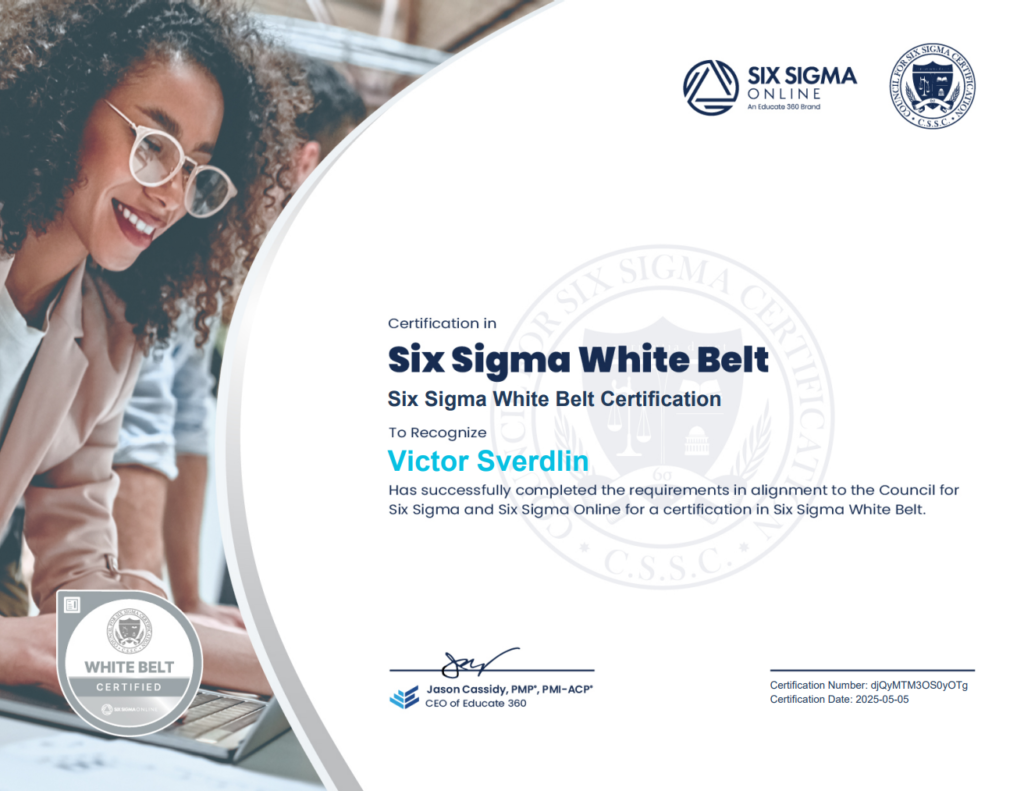
I completed this Six Sigma White Belt online course yesterday (05/06/25), a 45-minute academic adventure that I found quite interesting, even if much of it felt familiar from a practical standpoint. The course consisted of a brief intro video followed by text-book content covering the methodology’s origins at Motorola, Toyota, and others.
Overall, the written material was well structured, informative acronym heavy, and a bit dry. Much of it aligned with process improvement techniques I’ve already implemented on various projects.
Don’t get me wrong. I’m glad I started my Six Sigma journey, it will be helpful. The White Belt level provided a solid foundation that helped me recognize where I’ve already been applying these principles intuitively.
DMAIC: A Familiar Framework with a New Name
The White Belt course introduced DMAIC (Define, Measure, Analyze, Improve, Control), which formalizes something many of us do naturally in product management. It was validating to see my existing approaches formalized in a structured acronym as much methodology, from problem definition to maintaining improvements…and acronym, gotta have the acronyms.
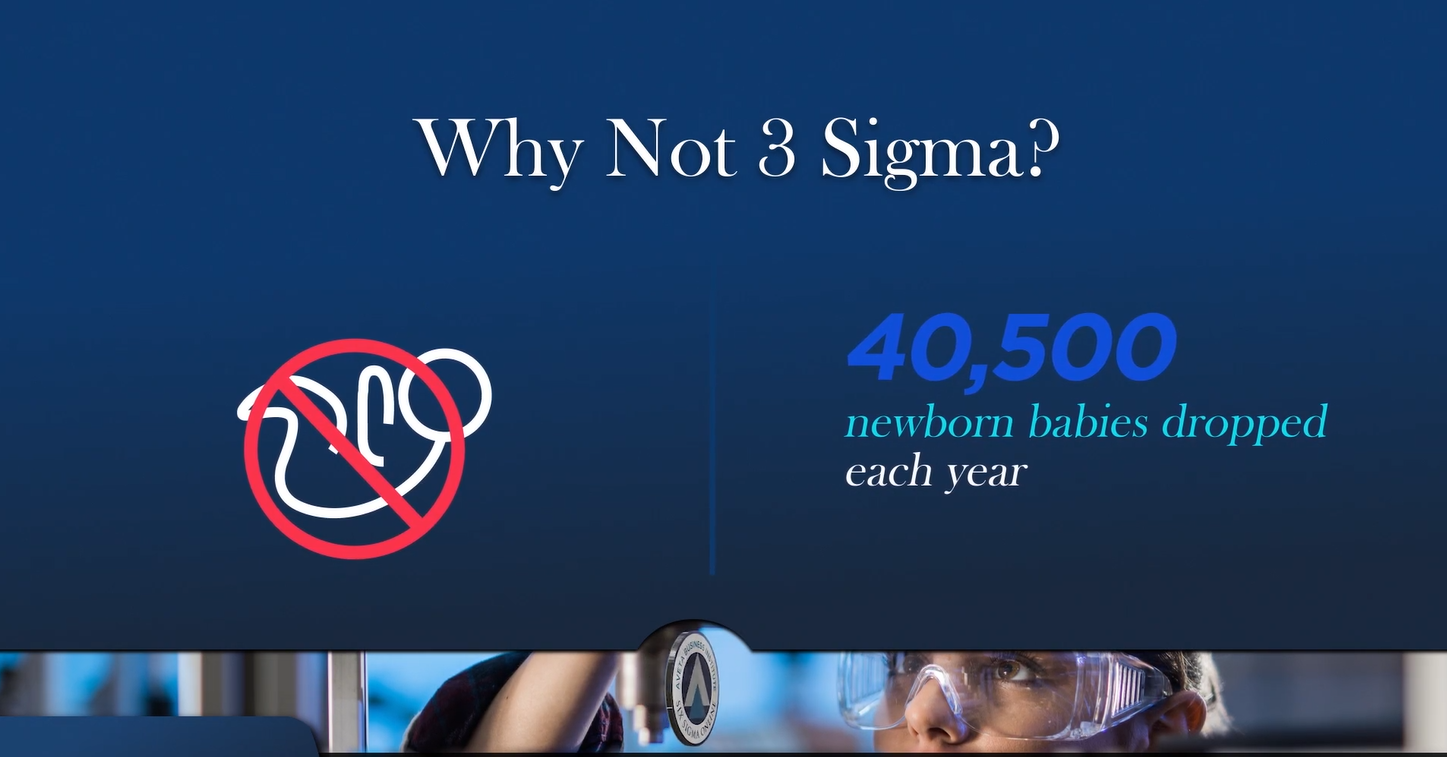
I also want to mention the into video’s baby dropping analogy, that was double downed on, that remained hilariously memorable: “Babies are being dropped in the hospital.” Questionable example aside, it was an effective way to help visualize what “3 Sigma” was and how it scaled up to “4 Sigma” and “6 Sigma.”
VOC: The The Value of Certification and it’s Acronyms
What I found most valuable about the White Belt certification isn’t that it taught me completely new concepts, but rather that it provided a standardized language (acronyms) for practices I’ve been using that I’ll be able to leverage in interviews and among my peers.
I imagine however, the real power comes from the White Belt’s nature of being a jumping off point to the Yellow Belt and Green Belt, the latter being the first truly comprehensive Six Sigma certification, not to mention spinning up the question for a company to pay for a Black Belt and later Master Black belt in the future.

The Exam (In)Experience
The exam was a straightforward 15-minute multiple choice assessment covering the course material. After submitting and seeing my 90% score, I was surprised to learn it was an open book exam all along and that I actually had thirty minutes to complete it. Go me, way to pay attention to details, right? Lucky for me, the principles were intuitive enough that the core concepts stuck without needing to look things up.

What’s Next?
As I mentioned briefly, this certification is just my first step on the Six Sigma path. I’m looking forward to pursuing Yellow and Green Belt certifications later this year. Time to update my LinkedIn profile with this new certification and prepare for the next certification in my sights!
Cheers!
No LLMs were horribly abused in the making of this post.